


How Access to ASL Transformed My Life
Growing up mainstreamed as a Deaf child was isolating for Rikki—but learning ASL changed everything. Read how language access transformed her life and career.

Having access to language, information, and people makes all the difference in the world ... ASL gave me friends, community, and work. It gave me a life.
In October 2022, a friend of mine who is a musician had his first solo show. I flew out to see him and support him. When the venue wouldn’t provide the ASL interpreter I requested, my friend paid for one out of his own pocket. I already knew the words to his songs, and recognized the music with my newly acquired hearing aids in, but having ASL interpreters on stage got me more involved. I got to be in on the jokes that were said.
I moved to Omaha, Nebraska in the summer of 2023. Before that, I grew up in North Carolina in the middle of Asheville and Charlotte for most of my life. In North Carolina, there weren’t a lot of interpreters available at events I wanted to go to. Most of the people I knew didn’t know ASL. I knew some people from the local Deaf community, but it was people a lot older than me or the students from the Deaf school. It was hard to find a connection.
In Omaha, it was completely different. The Deaf community here is much larger and with more variety in ages, so there’s a lot of people here around my age. So many more events here are accessible with ASL interpreters.
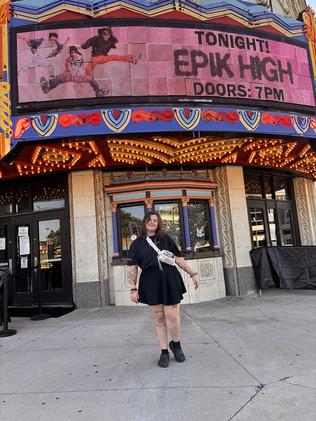
Just this past weekend, I went to see the play adaptation of Stephen King’s Misery for the first time. I wouldn’t have been able to enjoy it as much as I did without them. My Deaf friends and I got to enjoy so many shows and events at the park downtown and elsewhere in the city because of that access.
I got to learn from workshops at the co-working space I’m a member of, and at business conferences and events I was invited to attend. I was able to network with other business owners more efficiently. Having ASL interpreters in the same room as other business owners helped them realize that Deaf people exist and they had their own work to do in making their businesses accessible.
Having access to language, information, and people makes all the difference in the world. While my hearing aids have helped me out tremendously since getting them three years ago, they are not perfect. There is still so much that I miss when people move around, turn around, and I can’t attempt to read their lips. There’s too much noise in the background. It’s too dark around the person speaking. Having ASL, despite that I am not fluent, gives me more access even if I don’t know the sign. All I have to do is ask what the sign is and they can fingerspell it for me.
ASL gave me friends, community, and work. It gave me a life. I truly don’t know where I would be without the ASL I have in my life and I hope that the people reading this essay take these words and use them to bring more ASL accessibility into everyone’s lives.
More Like This
-

Becoming a Disabled Pop Star: Self-Expression and Building Community Through Music
Austin grew up feeling unseen, so he turned to music. Now he's bringing disability, identity, and joy to dance pop on his own terms. -

From Athlete to Advocate: Advancing Adaptive Fashion and Inclusive Design
Athlete Dave Stevens shares his experience with adaptive fashion—and how it’s driving confidence, visibility, and real change for people with disabilities. -

Healing After a Head Injury: Bipolar II, Creativity, and the Support That Helped Me Recover
A head injury forces a writer to reckon with overlooked self-harm and the limits of pushing through—revealing the power of care, rest, and human connection. -

The Burden Myth: What Strangers Get Wrong About Our Marriage
They call my wife a martyr and me a burden. Here's why thousands of strangers on the internet are wrong.


Sign up for Emails from Easterseals
Get exciting news, helpful resources, & inspiring stories delivered to your inbox each month.